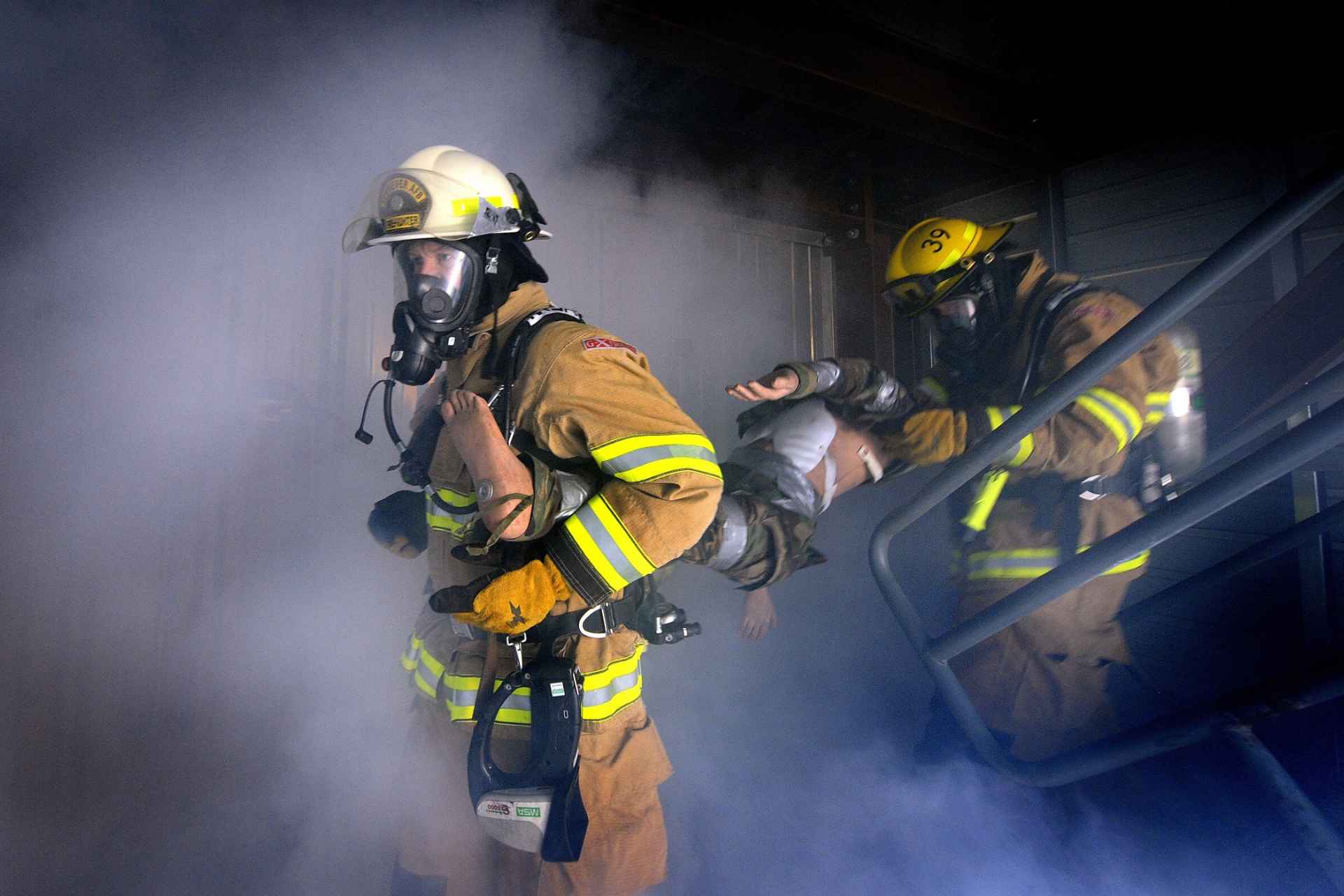
Zero-visibility search and rescue is one of the most demanding skills any firefighter ever masters. Navigating a pitch-black, smoke-choked hallway requires calm spatial orientation, disciplined air management, and seamless crew communication—pressure-tested coordination that makes an escape room feel like a casual puzzle by comparison. Historically, creating those blinding interior conditions meant burning wood pallets, straw, or synthetic furnishings inside concrete burn buildings. While effective at obscuring vision, traditional live-fire smoke blankets recruits and instructors in a toxic soup of carcinogenic soot, hydrogen cyanide, carbon monoxide, and volatile organic compounds. Today, a modern fire training system solves that hazard by pairing controlled heat and flame effects with high-output, non-toxic artificial smoke generators.
Replacing dirty carbonaceous smoke with engineered water- and glycol-based aerosol simulants has fundamentally changed how fire academies, municipal departments, and industrial safety teams train. Crews still experience realistic disorientation, thermal layering, and ventilation dynamics, yet they walk out of the burn building without absorbing known carcinogens through their skin or respiratory tracts.
The Quick Edit
- Eliminating Occupational Carcinogen Exposure: Non-toxic smoke generators produce dense visual obscuration without releasing polycyclic aromatic hydrocarbons (PAHs), benzene, or heavy particulate soot onto turnout gear and skin.
- Precision Control Over Visibility and Ventilation: Instructors can adjust smoke density and hang time on demand—from light haze to total blackout—and clear compartments rapidly with exhaust fans between evolutions.
- Cleaner Facilities and Lower Maintenance: Residue-free artificial smoke protects interior sensors, structural linings, and rescue manikins from sticky soot buildup while extending equipment service life.
The Hidden Health Cost of Traditional Training Smoke
For decades, soot-streaked turnout gear and smoky skin after a training drill were treated as badges of honour across the fire service. Occupational health research has since proven that repeated smoke exposure is a primary driver behind elevated cancer rates among career and volunteer firefighters. When solid Class A fuels or hydrocarbon materials burn in oxygen-limited training rooms, incomplete combustion generates microscopic particulates loaded with carcinogens.
Those toxic compounds do not merely pose an inhalation threat during the drill itself. Soot settles onto helmet shrouds, gloves, neck skin, and apparatus cab seats, continuing to off-gas and absorb dermally long after crews return to the station. Even more concerning, training instructors often endure ten to twenty times more smoke evolutions per year than front-line recruits, compounding their cumulative chemical burden with every academy class. Integrating non-toxic smoke into realistic fire training simulators removes this unnecessary occupational hazard at the source while preserving the tactical stress recruits need to build muscle memory.
How Non-Toxic Smoke Generators Create Zero-Visibility Realism
Modern theatrical- and industrial-grade smoke generators engineered for emergency response training rely on clean, pharmaceutical- or food-grade water and glycol formulations rather than combustion. Inside the generator, a precision heat exchanger vaporizes the liquid solution and expels it through a calibrated nozzle into cooler ambient air, where it immediately condenses into millions of microscopic, light-scattering droplets.
Because those droplets refract light across the visible spectrum, even a modest volume of aerosol produces thick, uniform visual obscuration that mimics true fireground blackout conditions. Unlike wood or hay smoke that rises unpredictably and stings exposed eyes, engineered smoke fluids can be tailored for specific training objectives. Quick-dissipating formulations allow instructors to run rapid back-to-back search evolutions without lengthy ventilation delays, while high-persistence formulations maintain dense, floor-to-ceiling obscuration throughout extended multi-company search, hoseline advancement, and positive-pressure ventilation (PPV) drills.
Pairing Clean Smoke With Controlled Live-Fire Systems
One of the greatest strengths of contemporary training props is their modular design. Many departments combine non-toxic smoke machines with clean-burning gas props so crews experience genuine radiant heat and flame rollover alongside zero-visibility navigation. Evaluating propane and other fuel sources in fire training simulators helps training officers balance thermal realism with air-quality safety, since properly tuned propane or natural gas burners combust cleanly into water vapour and carbon dioxide rather than thick black particulate smoke.
When pairing artificial smoke with live flame props or thermal heaters, system engineering and fluid selection matter enormously. High-grade training smoke fluids are formulated to remain chemically stable across standard simulator operating temperatures, and integrated automated distribution manifolds route smoke safely away from direct burner impingement zones. That coordinated design ensures recruits experience authentic heat-and-smoke layering—forcing them to stay low beneath the thermal ceiling—without generating hazardous thermal breakdown byproducts.
Protecting Training Facilities, Props, and Specialized Sites
Beyond protecting firefighter health, non-toxic smoke dramatically reduces facility wear and tear. Traditional wood-smoke residue coats concrete walls, corrodes steel doors, fouls optical flame sensors, and ruins expensive thermal imaging cameras and electronic rescue manikins. Cleaning baked-on creosote and soot after every academy cycle consumes valuable maintenance hours and shortens the structural lifespan of the burn building.
Clean water-based smoke leaves virtually zero oily film or carbonaceous grit behind, keeping interior surfaces, ductwork, and digital training controls spotless between evolutions. That cleanliness is equally valuable for specialized large-scale facilities, such as teams planning an ARFF training site for airport rescue and firefighting crews. Aviation simulators rely on intricate fuselage mockups, fuel-spill burner pans, and sensitive automated safety interlocks that perform far more reliably when dense visual smoke is generated cleanly rather than through dirty hydrocarbon burns.
Essential Safety Protocols When Training With Artificial Smoke
While modern training smoke fluids are non-toxic, non-irritating, and verified through comprehensive Safety Data Sheets (SDS), responsible academies never treat artificial smoke casually. Maintaining strict fireground discipline during every simulated evolution reinforces life-saving habits and protects personnel from mechanical aerosol irritation or heat stress.
First, every trainee and instructor entering a smoke-charged compartment must wear full personal protective equipment and breathe on a self-contained breathing apparatus (SCBA) from start to finish. Even benign water-glycol aerosols can cause minor throat dryness if inhaled at high concentrations, and training in full SCBA builds realistic air-consumption awareness under stress. Second, facilities should verify that smoke fluid concentrations stay within manufacturer exposure limits and ensure high-capacity mechanical exhaust systems are ready to purge compartments instantly if a trainee experiences mask dislodgement or medical distress. Finally, instructors should inspect generator reservoirs regularly, using only manufacturer-approved fluids rather than unverified substitutes that could clog heating blocks or alter vapour chemistry.
Advancing Firefighter Readiness Without Compromising Long-Term Health
Modern fire service training no longer forces departments to choose between realistic tactical preparation and long-term firefighter wellness. By generating dense, controllable zero-visibility conditions without carcinogenic soot or toxic combustion gases, non-toxic smoke systems allow recruits and veterans alike to sharpen their search, rescue, and ventilation skills safely—ensuring everyone goes home healthy after both training drills and real emergencies.