
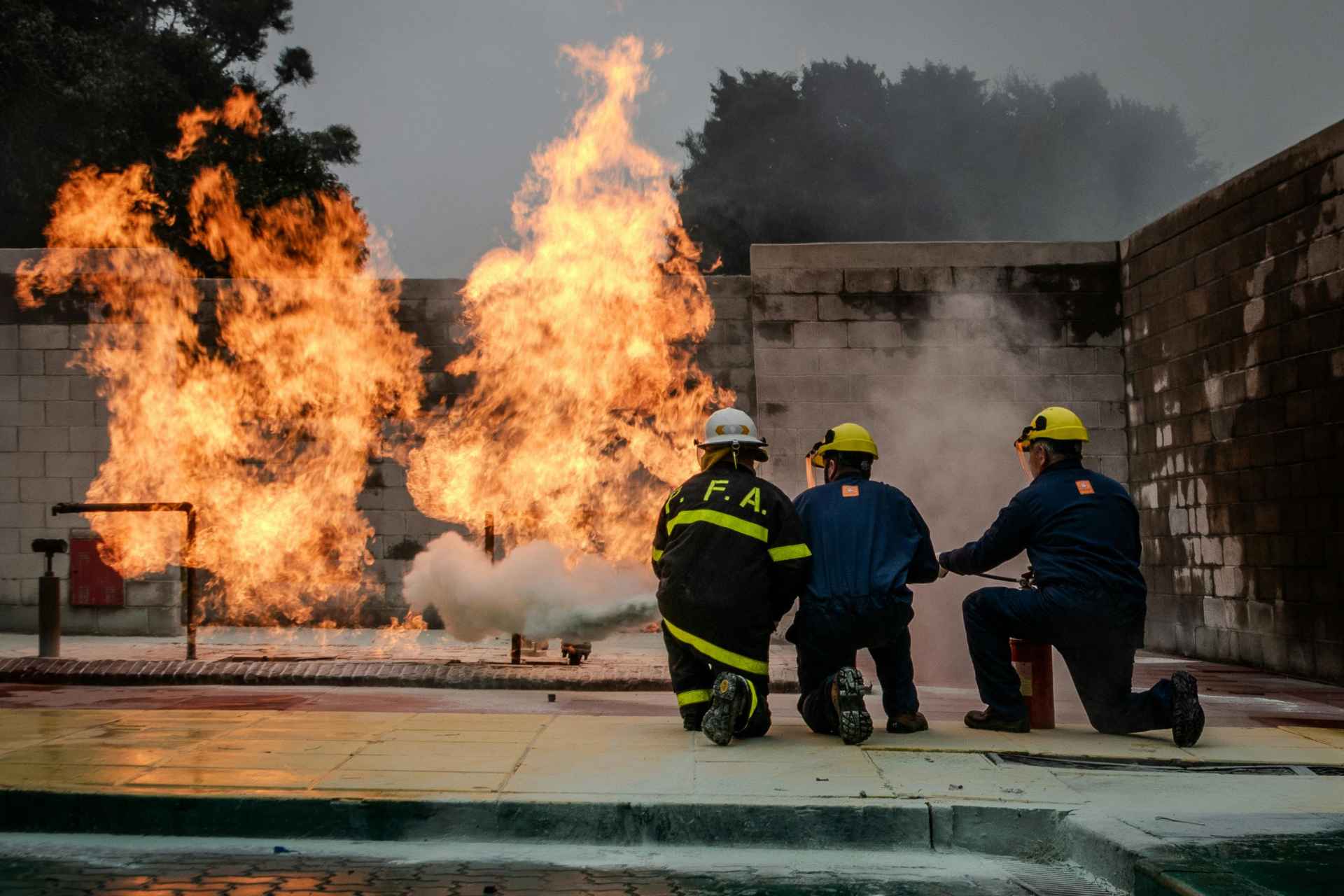
Modern fire service instruction demands a delicate balance between extreme realism and uncompromising recruit safety. Traditional Class A burns relying on wood pallets and hay straw carry inherent unpredictability, producing erratic heat signatures and toxic smoke profiles that can jeopardize training evolutions. Today, adopting a state-of-the-art live Fire Training System powered by clean-burning liquid propane allows training officers to deliver repeatable, high-intensity scenarios with precise control.
By integrating engineered burner technology into modern facilities, instructors can simulate complex emergency conditions on demand. The fundamental differences in combustion efficiency, environmental impact, and operational safety become clear when evaluating propane vs. other fuel sources in fire training simulators, illustrating why modern departments rely on clean gas technology to protect both trainees and surrounding air quality.
The Quick Edit
- Forced-Air Mixing: Industrial blowers blend ambient air with vaporized propane to create realistic, controllable flame behaviour.
- Closed-Loop Safety: Integrated thermal sensors and gas detection loops automatically trigger gas cutoffs if parameters exceed safe limits.
- Instant Resets: Push-button burner controls eliminate downtime between recruit evolutions, maximizing overall training efficiency.
The Core Architecture of a Propane Burner System
At the heart of every modern gas-fueled simulator is an industrial burner assembly engineered specifically to withstand extreme heat and water exposure. Unlike standard commercial heating burners, live fire training burners must operate reliably while directly bombarded by firefighter hose streams.
Fabricated from heavy-gauge stainless steel, the sub-surface burner grid rests beneath durable floor grating or structural props. Specialized diffuser plates distribute gas evenly across the surface, replicating authentic bed, couch, or industrial fuel-spill fires. Simultaneously, industrial blowers force fresh air into the combustion zone. Adjusting this air-to-fuel ratio allows instructors to transform clean, blue propane flames into heavy, luminous yellow flames that mimic authentic structural fires.
To start the system safely, a rugged ignition matrix housed in protective stainless steel establishes a reliable pilot flame before main gas valves open. Constructing these components from high-grade corrosion-resistant alloys guarantees the burner assembly survives rapid cooling cycles when struck by suppression water streams.
Automated Gas Control and Programmable Flame Stages
Precision gas management transforms a basic gas pipe into an advanced educational tool. Automated control manifolds regulate propane flow, allowing instructors to scale fire intensity dynamically based on recruit performance using a wireless handheld controller or a centralized master station.
Instructors can adjust fire height from small roll-over flames to fully involved room flashovers with the touch of a button. Pre-set training routines also scale fire growth automatically over time, testing recruit response speeds under controlled conditions.
Furthermore, advanced burner grids incorporate sensors that detect when hose streams hit the target area. The control system automatically reduces flame height in response to proper nozzle technique, providing recruits with immediate tactical validation and reinforcing proper suppression techniques through realistic system responses.
Environmental Compliance and Smoke Generation Integration
Operating a live fire facility in modern municipal environments requires strict adherence to environmental regulations and local air quality standards. Traditional wood and straw burns emit thick, particulate-heavy smoke containing toxic combustion products, forcing facilities to limit training days or face heavy regulatory scrutiny.
Clean propane burners burn virtually smokeless, allowing training centers to operate continuously in urban environments without producing air pollution complaints. When instructors need to simulate zero-visibility conditions or thermal layering, integrated artificial smoke generators introduce dense, non-toxic theatrical smoke directly into the air stream. This artificial smoke mimics heavy structural fire conditions without depositing toxic creosote on building walls or exposing recruits to carcinogenic particulates.
Safety Automation: Gas Sensing, Thermal Limits, and Fail-Safes
Safeguarding instructors and recruits during live burn evolutions requires multi-layered electronic safety systems working alongside strict operational protocols. To ensure every physical interlock, PPE requirement, and communication line is prepped before ignition, instructors should always review a comprehensive live fire training safety checklist prior to initiating any evolution.
Automated thermal sensors and ultraviolet flame detectors constantly confirm pilot flame presence, closing main gas valves in under one second if a pilot extinguishes. At the same time, gas detection sensors positioned in low-lying sumps and ceiling cavities monitor for unburned propane, automatically halting gas delivery and activating high-volume purge fans if concentrations rise.
Finally, hardwired emergency stop buttons located inside the control room, outside the burn structure, and on portable instructor pendants allow instant system shutdown at any moment. Integrating automated safety controls ensures that training exercises remain strictly within safe operational boundaries.
Data Logging and Performance Analytics for Recruits
Modern propane training systems do more than manage fuel flow; they record detailed telemetry during every training scenario. Digital control consoles log operational variables such as heat output, gas consumption, exercise duration, and thermal exposure levels throughout each evolution.
Instructors can review these performance metrics immediately following a drill to evaluate recruit decision-making and hose handling efficiency. By analyzing how quickly recruits achieved fire knockdown relative to water application times, training officers provide objective, data-backed feedback. This objective reporting accelerates skill development while maintaining standardized assessment criteria across entire recruit classes.
Long-Term Maintenance and System Reliability Benefits
Investing in a gas-fueled training system provides significant operational longevity and maintenance savings over legacy wood-burning facilities. Uncontrolled Class A timber fires generate severe thermal shock, heavy soot deposition, and corrosive ash byproduct that rapidly degrades structural concrete walls and steel framing. In contrast, propane combustion produces zero particulate ash and operates within tightly regulated temperature ceilings.
By eliminating toxic residue, fire departments dramatically reduce structural repair overhead, prevent drain line clogs, and eliminate labour-intensive post-training cleanup. Routine preventative maintenance focuses primarily on basic electronic sensor calibration and valve inspections, ensuring the facility remains in constant operational readiness with minimal long-term downtime.
Facility Integration: From Custom Structures to ARFF Sites
The versatility of propane-based burner technology allows systems to be installed across diverse training environments. Whether equipping a multi-story concrete training tower, a modular shipping container prop, or an expansive aviation fire ground, burner components scale to meet specific mission requirements.
These design principles extend directly to specialized installations, such as airfield training sites where safety perimeters and fuel zoning require extra care. When mapping out these complex facilities, understanding how to plan an ARFF training site provides crucial guidance on managing runway clearances, fuel storage zoning, and aircraft prop placement. Integrating smart burner grids into these custom structural builds equips departments with an adaptable, clean-burning, and highly effective training facility built for decades of service.
Control, Realism, and Uncompromised Safety
Adopting a smart propane live fire training system elevates firefighter preparation by combining realistic flame behaviour with rigorous safety automation. By harnessing forced-air burners, programmable flame stages, and instant emergency cutoffs, training officers deliver high-impact, repeatable drills without exposing personnel to uncontrolled hazards. Investing in modern gas burner technology ensures your department trains safely, efficiently, and effectively for years to come.
